

Faculty Research Profile
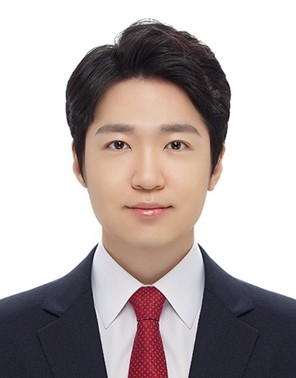
Yang Jeong Park


학력
· 2020 : PhD, Nuclear and Quantum Eng., KAIST
· 2015 : MS, Nuclear and Quantum Eng., KAIST
· 2013 : BS, Nuclear and Quantum Eng., KAIST
주요 경력
· 2026~present : Assistant Professor, UNIST
· 2025~2026 : Senior Researcher, KIST
· 2023~2025 : Postdoc, MIT
· 2021~2023 : Postdoc, Seoul National University
· 2020~2021 : Staff Engineer, Samsung Electro-Mechanics Corp.
수상/학회/외부활동
· Member of the Korean Chemical Society
· Member of the Korean Physical Society
· Member of the Korean Electro-Chemical Society
· Member of the Korean Institute of Metals and Materials
· Member of the Korea Photovoltaic Society
· Member of the Korean Solar Energy Society
과학인공지능 연구실
Scientific AI Laboratory
수십 년간 소재 과학의 발전은 실험적 발견과 이론적 모델링에 크게 의존해 왔습니다. 하지만 이러한 전통적인 방식은 시간과 비용이 많이 소요되며, 소재가 가진 방대한 화학적·구조적 설계 공간을 완벽히 탐사하는 데 한계가 있습니다. 인공지능(AI)의 등장은 이러한 패러다임을 혁신하여, 이전에는 도달할 수 없었던 방식으로 소재 발견을 가속화하고 예측 정확도를 높이며 물성을 최적화하고 있습니다. 우리 연구실은 소재 과학에 특화된 AI 방법론을 개발하여 예측 모델링과 실험 자동화의 통합을 지향합니다. 물리적 제약 조건과 도메인 지식을 준수하면서도 복잡한 다차원 데이터를 처리할 수 있는 AI 모델을 구축하고 있습니다. 특히 데이터 중심의 연구 방법론을 통해 시뮬레이션, 고처리량 실험, AI 알고리즘이 시너지를 내는 과학 발견 시스템을 구현하는 연구를 수행하고 있습니다.
For decades, materials science has relied heavily on experimental discovery and theoretical modeling. However, these traditional approaches are time-consuming, costly, and limited in navigating the vast chemical and structural design space. The advent of Artificial Intelligence (AI) is transforming this paradigm by accelerating discovery, enhancing predictive accuracy, and optimizing material properties in unprecedented ways. Our laboratory develops specialized AI methodologies for materials science, aiming to integrate predictive modeling with experimental automation. We build AI models capable of processing complex multidimensional data while adhering to physical constraints and domain knowledge. Through a data-driven approach, our research implements a scientific discovery system that creates synergy between simulations, high-throughput experiments, and AI algorithms.
For decades, materials science has relied heavily on experimental discovery and theoretical modeling. However, these traditional approaches are time-consuming, costly, and limited in navigating the vast chemical and structural design space. The advent of Artificial Intelligence (AI) is transforming this paradigm by accelerating discovery, enhancing predictive accuracy, and optimizing material properties in unprecedented ways. Our laboratory develops specialized AI methodologies for materials science, aiming to integrate predictive modeling with experimental automation. We build AI models capable of processing complex multidimensional data while adhering to physical constraints and domain knowledge. Through a data-driven approach, our research implements a scientific discovery system that creates synergy between simulations, high-throughput experiments, and AI algorithms.

연구분야
차세대과학컴퓨팅, 자율주행실험실, 소재인공지능 / Advanced Scientific Computing, Autonomous Laboratory, AI for Materials
Advanced Scientific Computing, Autonomous Laboratory, AI for Materials
연구 희망분야
과학적 가설 생성, 극한환경용 소재 역설계, 멀티모달과학기초모델, 탄소중립순환경제 / Scientific hypothesis generation, Inverse design for extreme-environment materials, Multimodal foundation models for science, AI-driven circular materials economy
Scientific hypothesis generation, Inverse design for extreme-environment materials, Multimodal foundation models for science, AI-driven circular materials economy
연구주제
인공지능, 기계학습, 양자화학, 소재역설계, 자율주행실험실
Artificial intelligence, Machine learning, Quantum chemistry, Inverse design of materials, Self-driving laboratory
Artificial intelligence, Machine learning, Quantum chemistry, Inverse design of materials, Self-driving laboratory
논문
· Nature Energy | An actor–critic algorithm to maximize the power delivered from direct methanol fuel cells | Hongbin Xu†, Yang Jeong Park†, Zhichu Ren, Daniel J. Zheng, Davide Menga, Haojun Jia, Chenru Duan, Guanzhou Zhu, Yuriy Román-Leshkov, Yang Shao-Horn*, Ju Li* | 2025-07
· Nature Computational Science | Deep contrastive learning of molecular conformation for efficient property prediction | Yang Jeong Park*, HyunGi Kim, Jeonghee Jo, Sungroh Yoon* | 2023-12
특허
· Method for manufacturing of metal oxide nanoparticles and metal oxide nanoparticles thereby | 10193133 | USA | 2019
· Anti-corrosive Metal Having Oxide Layer and Method for Preparing the Same | 10-2027958 | Republic of Korea | 2019