

Faculty Research Profile

Saiah Lee


학력
Ph.D., Economics, University of Wisconsin-Madison
M.S., Economics, University of Wisconsin-Madison
M.A., Economics, Miami University
B.A., Economics, Yonsei University
주요 경력
Associate Professor of Economics, UNIST
Research Fellow at the Enterprise Policy Center (EPC), Seoul National University
(現) 울산과학기술원 교수 (UNIST, Ulsan)
(現) 서울대학교 중소벤처기업정책센터 연구위원
(現) 기획재정부 복권기금사업 성과평가위원
(前) 한국은행 울산본부 자문교수
(前) 울산광역시 물가대책위원
(前) 위스콘신대학교 빈곤문제연구소
수상/학회/외부활동
American Economic Association
Econometric Society
Korea-America Economic Association
Korean Economic Association
Korea International Economic Association
Korean Association of Applied Economics
Korea Academic Society of Industrial Organization
경제분석 연구실
Economic Analysis
우리 연구실에서는 경제이론과 미시 빅데이터 분석을 결합해 거시∙국제경제 현상과 금융시장의 메커니즘을 실증적으로 규명하고 있습니다. 주요 연구 분야는 거시∙통화경제학, 국제무역∙금융, 시계열 계량분석, 경제학에서의 인공지능 활용입니다. 최근에는 데이터 불확실성하의 통화정책, 글로벌 가치사슬 속 기업의 화폐 선택과 환율 패스스루, 기업의 달러 부채와 수출 가격 결정, 가계 및 기업 신용의 변화, 경제정책 불확실성이 해외직접투자(FDI)에 미치는 영향, 그리고 기업의 혁신활동을 빅데이터에 기반하여 평가하는 계량적 방법론을 연구하고 있습니다. 또한 인공지능(AI)과 자연어처리(NLP)를 활용한 경제 데이터 분석, 시계열 예측, 정책 효과 추정 등 첨단 데이터 과학 방법론을 경제학 연구에 적용하고 있습니다. 장기적으로는 금융시장과 거시경제의 상호작용, 인플레이션과 실업의 변화, 소비 및 투자 변동의 원인, 글로벌 공급망과 금융요인의 결합이 거시경제에 미치는 영향을 탐구하며, AI 기반 계량∙예측 기법 개발에도 관심을 두고 있습니다.
Our research team combines economic theory with micro big data analysis to investigate the mechanisms driving macro-financial dynamics and international trade. Our work spans macro and monetary economics, international trade and finance, applied time-series econometrics, and the use of artificial intelligence (AI) in economics. Recently, we have focused on monetary policy under data uncertainty, currency choice and exchange rate pass-through in global value chains, the role of corporate dollar debt in exporters’ pricing, household and corporate credit dynamics, the impact of economic policy uncertainty on foreign direct investment (FDI), and developing econometric methods to evaluate firms’ innovation activities using big data. We also apply AI and natural language processing (NLP) to economic big data analysis, time-series forecasting, and policy evaluation. Our long-term agenda explores the interaction of financial markets and the macroeconomy, inflation and unemployment dynamics, fluctuations in consumption and investment, and how global value chains and financial frictions shape macroeconomic outcomes, while advancing AI-driven econometric and forecasting methods.
Our research team combines economic theory with micro big data analysis to investigate the mechanisms driving macro-financial dynamics and international trade. Our work spans macro and monetary economics, international trade and finance, applied time-series econometrics, and the use of artificial intelligence (AI) in economics. Recently, we have focused on monetary policy under data uncertainty, currency choice and exchange rate pass-through in global value chains, the role of corporate dollar debt in exporters’ pricing, household and corporate credit dynamics, the impact of economic policy uncertainty on foreign direct investment (FDI), and developing econometric methods to evaluate firms’ innovation activities using big data. We also apply AI and natural language processing (NLP) to economic big data analysis, time-series forecasting, and policy evaluation. Our long-term agenda explores the interaction of financial markets and the macroeconomy, inflation and unemployment dynamics, fluctuations in consumption and investment, and how global value chains and financial frictions shape macroeconomic outcomes, while advancing AI-driven econometric and forecasting methods.
연구분야
Macro and Monetary Economics, International Economics, Applied Time-Series Econometrics, Machine Learning
Macro and Monetary Economics, International Economics, Applied Time-Series Econometrics, Machine Learning
연구 희망분야
Machine Learning Approach to Economic Analysis
Machine Learning Approach to Economic Analysis
연구주제
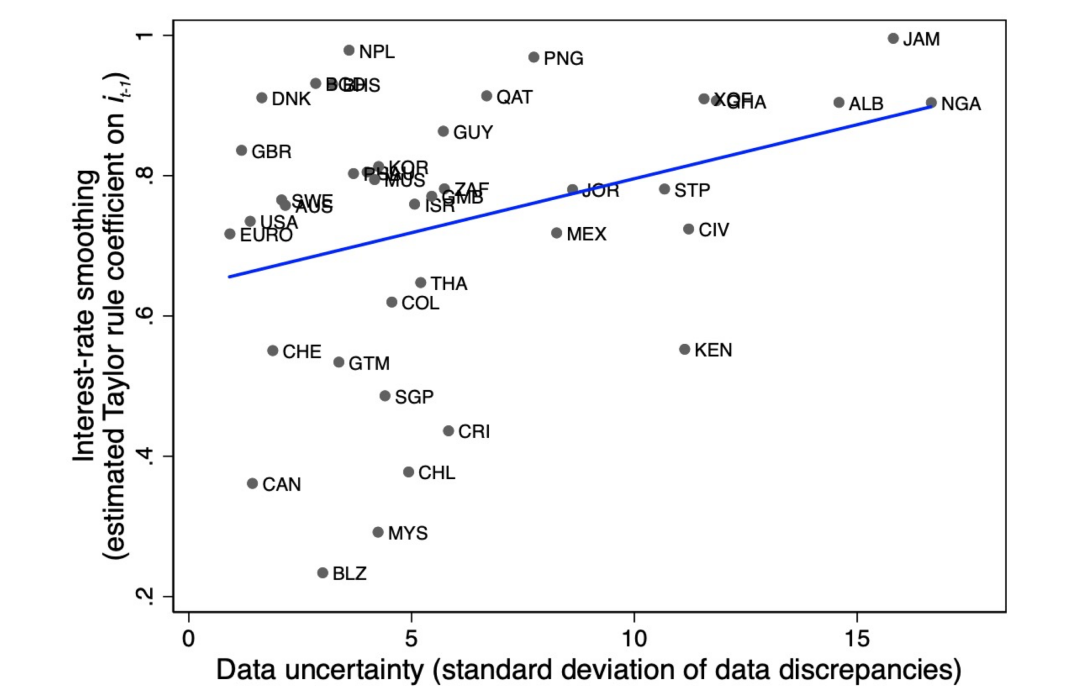
• 데이터 불확실성 상황에서의 통화 정책 (Monetary Policy under Data Uncertainty)
• 국제 무역에서의 화폐 선택 (Currency Choice in International Trade)
• 경제정책의 불확실성과 해외직접투자 (Economic Policy Uncertainty and Foreign Direct Investment)
• 인공지능 기반 통화정책 분석 (Artificial Intelligence-based Analysis of Monetary Policy)
• 신흥국에서 가계 및 기업 신용의 작용 (Household and Corporate Credit Behavior in Emerging Economies)
• Monetary Policy under Data Uncertainty
• Currency Choice in International Trade
• Economic Policy Uncertainty and Foreign Direct Investment
• Artificial Intelligence-based Analysis of Monetary Policy
• Household and Corporate Credit Behavior in Emerging Economies
국가연구개발사업 기술 분류체계
국가과학기술표준분류
SC. 경제/경영 > SC02. 거시경제 > SC0204. 금융(화폐)경제
논문
• The Cyclical Behavior of Household and Corporate Credit in Emerging Economies (with Seung-Gyu Sim), Emerging Markets Review 45, 2020.
• Macroeconomic Conditions and Wage Inequality: Expanding and Analyzing the Worldwide Dataset, Annals of Economics and Finance 24(2), 2023.
• Are Exporters Naturally Hedged? Corporate Dollar Debt and Global Trade (with Junhyong Kim and Annie Soyean Lee)
• Central Bank Swap Lines, Bank Risk Management and Currency Choice in Trade (with Yang Jiao, Ohyun Kwon, and Shang-Jin Wei)
• Does RMB Internationalization Promote Cross-Border Trade? (with Yang Jiao and Ohyun Kwon)
• Monetary Policy under Data Uncertainty: Interest-Rate Smoothing from a Cross-Country Perspective
• The Role of Economic Policy Uncertainty in Outward Foreign Direct Investment (with Yuhyeon Bak)
• Dynamic Coupling of the U.S. and Canadian Industrial Production Indices
• Machine Learning Approach to FOMC Sentiment Analysis (with Hope H. Han)