

Faculty Research Profile

Myung Gon Ko


학력
· 2006: Ph.D., Molecular Immunology, Seoul National University
· 2002: M.S., Genetic Engineering, Seoul National University
· 1999: B.S., Molecular Biology, Seoul National University
주요 경력
· 2022~Present: Associate Professor, UNIST
· 2015~2022: Assistant Professor, UNIST
· 2011~2015: Instructor, La Jolla Institute for Allergy & Immunology
· 2010~2011: Post-doctoral fellow, La Jolla Institute for Allergy & Immunology
· 2009~2010: Post-doctoral fellow, Harvard Medical School
· 2006~2009: Post-doctoral fellow, Seoul National University
수상/학회/외부활동
· 2016~: Member of Korean Society for Molecular and Cellular Biology
· 2016~: Editorial Board Member, Molecular and Cellular Biology
· 2015~: Member of Korean Society for Biochemistry and Molecular Biology
· 2015 TJ Park Science Fellowship, POSCO TJ Park Foundation
· 2011~2014: Special Fellow Award, Leukemia & Lymphoma Society
· 2000~2001: Woosan Fellowship, Woosan Foundation
종양후생유전학연구실
Cancer Epigenetics Laboratory
- 생체 내 암 발생 원리 규명
- 세포의 정상 분화 및 암화의 조절 메커니즘 규명
- 암특이적인 변이를 표적으로 하는 새로운 표적항암치료제 개발
- 세포 내 (비만, 당뇨, 간질환 관련) 대사의 후생유전학적 조절기전 규명
- 줄기세포 노화, 염증 및 노화 연관 질환 발달 기전 규명
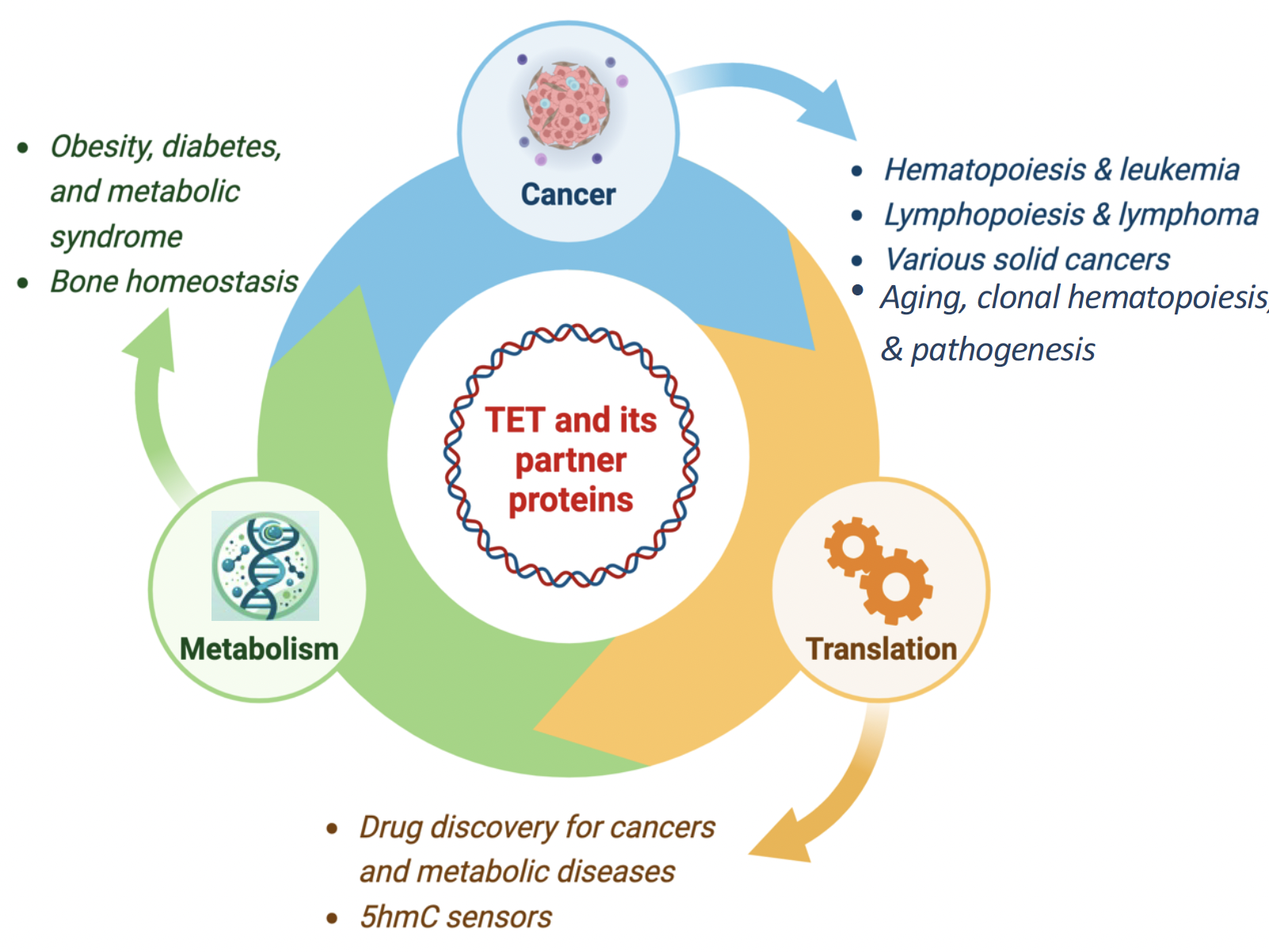
How do alterations in epigenetic landscape disturb the barrier between normal and malignant states to cause cancers? How can we translate these cancer-related aberrations into more efficient cancer therapy? These are two overarching questions that our research is currently addressing. The intricate interplay between genetic and epigenetic pathways plays key roles in regulating normal and malignant cellular development.
How do alterations in epigenetic landscape disturb the barrier between normal and malignant states to cause cancers? How can we translate these cancer-related aberrations into more efficient cancer therapy? These are two overarching questions that our research is currently addressing. The intricate interplay between genetic and epigenetic pathways plays key roles in regulating normal and malignant cellular development.
연구분야
종양, 고형암, 혈액암, 후생유전학, 비만, 대사, 대사질환, 치료제 개발/ Cancer, solid cancers, hematologic malignancies, epigenetics, obesity, diabetes, metabolic disease, therapy
Cancer, solid cancers, hematologic malignancies, epigenetics, obesity, diabetes, metabolic disease, therapy
연구주제
- 암 발생 원리 규명 (Dysregulation of key genetic and epigenetic players that leads to the onset and progression of cancers)
* 혈액암 및 고형암 발달 기전
* 생체내 대사, 염증 및 면역반응, 노화
* 유전자 발현 및 세포 분화의 후생유전학적 조절 기전
- 종양특이적 후생유전학적 변이를 표적으로 하는 신개념 항암 치료제
- 줄기세포 노화, 염증 및 노화 연관 질병 발달 기전 규명
국가연구개발사업 기술 분류체계
국가과학기술표준분류
LA. 생명과학 > LA01. 분자세포생물학 > LA0105. 유전자 발현조절
논문
· ACS Nano/ Portable, wireless potentiostat sensor for ultra-sensitive, real-time detection of 5hmC in genomic DNA using tree-like graphene / Imran et al./ 2025
· Ann. Rev. Immunol. / TET enzymes in the immune system: from DNA demethylation to immunotherapy, inflammation, and cancer / Hiroshi et al. / 2024
· PNAS / Inducible disruption of Tet genes results in myeloid malignancy, readthrough transcription, and a heterochromatin-to-euchromatin switch / Hiroshi et al. / 2023-1
· PNAS / Loss of adipose TET proteins enhances β-adrenergic responses and protects against obesity by epigenetic regulation of β3-AR expression / Byun et al. / 2022-6
· Nature Communications / Acute loss of TET function results in aggressive myeloid cancer in mice / An et al. / 2015-11
· Nature / Modulation of TET2 expression and 5-methylcytosine oxidation by the CXXC domain protein / Ko et al / 2013-05
· Nature / Impaired hydroxylation of 5-methylcytosine in myeloid cancers with mutant TET2 / Ko et al. / 2010-12
특허
· TET 발현 또는 활성 저해에 의한 비만 및 대사질환 억제/고명곤, 변성준/2021